









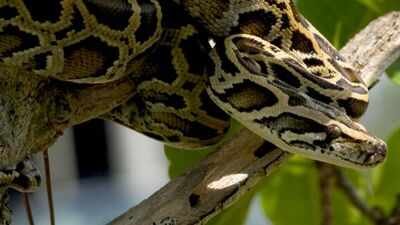
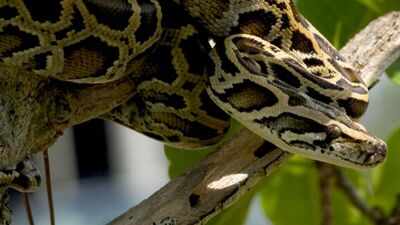
A drone may help scientists find Burmese pythons hidden across the Everglades. US Geological Survey researchers are testing radio-tracking technology carried by small uncrewed aircraft systems (sUAS) to locate the invasive snakes more efficiently. The work aims to give researchers a clearer picture of how pythons move through the Greater Everglades Ecosystem, where their camouflage and elusive behaviour make them difficult to track.Researchers have implanted radio transmitters in some pythons to track their movements during both breeding and non-breeding seasons. According to the US Geological Survey, the airborne system is being tested to locate pythons more often, which could improve research data and efficiency while also improving staff safety.
How are scientists testing drones to track hidden Burmese pythons
USGS researchers are testing radio-tracking technology carried by sUAS, to locate Burmese pythons more efficiently. USGS is working with partners in South Florida, including the South Florida Water Management District and the UF Croc Docs Team, on a parallel study of python movement at the Francis S. Taylor Wildlife Management Area, a very different, aquatic environment. The drone testing is described as part of this movement research. Separately, researchers use location data from snakes implanted with radio-transmitters through the scout programme in Big Cypress National Preserve to study how pythons use space.The airborne system is designed to make it possible to locate tagged pythons more often while improving research data, efficiency, and staff safety during surveys.
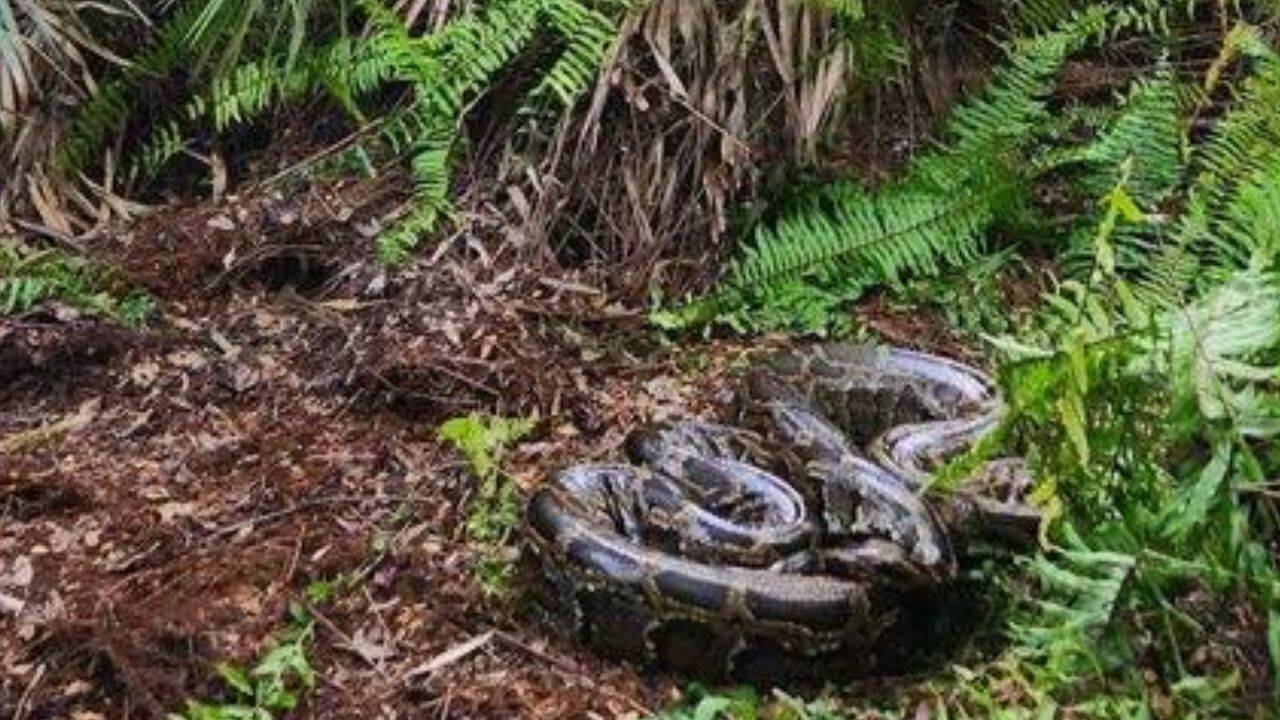
PC: US Geological Survey
What can radio-tracking reveal about Burmese pythons
Burmese pythons are a highly cryptic species, and their movement and dispersal patterns are not well understood. Scientists at the USGS Fort Collins Science Center and Wetland and Aquatic Research Center use radio-transmitter data from scout snakes to study how pythons use space during breeding and non-breeding seasons.The information can help researchers estimate home range sizes and examine overlap in space use over long periods. It also shows how often pythons stay in the same area or move to a new one.These patterns provide information about habitat preferences and requirements, the rate at which pythons may be expanding their range, and how habitat use overlaps among pythons. The new airborne tracking system is being tested alongside this ongoing research effort.
Challenge of tracking Burmese pythons
The study forms part of a broader USGS effort to understand Burmese pythons across the Greater Everglades Ecosystem. The invasive snakes have become established across the ecosystem and pose a serious threat to native wildlife. They can reach more than 17 feet in length, while their camouflage and elusive behaviour have made them notoriously difficult to study.For over a decade, scientists and land managers have worked to understand python ecology, yet reliable population estimates have not yet been derived. USGS researchers and partners are collecting information on survival, reproduction, spatial use, feeding rates, and abundance.The research includes a year-round scout programme, in which male and female pythons are tracked continuously by researchers and University of Florida interns.
How could airborne tracking support python management
The airborne radio-tracking work is one part of research intended to provide information for managing the invasive species. USGS says its researchers are pursuing a multi-faceted strategy and working with multiple entities so data, knowledge, and resources can be shared.The broader research includes studies of vital rates, reproductive ecology, movement, deer consumption, population abundance, and mercury levels. Data from radio-tagged snakes can help researchers understand movement across different habitats and seasons.The airborne system is being tested because locating pythons more frequently may improve the information available to scientists. USGS states that if the technology proves feasible in the complex habitats of the Everglades, the innovation could strengthen invasive species management and advance restoration efforts across the Greater Everglades.