









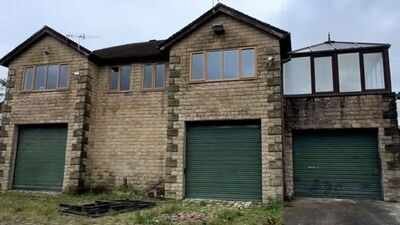
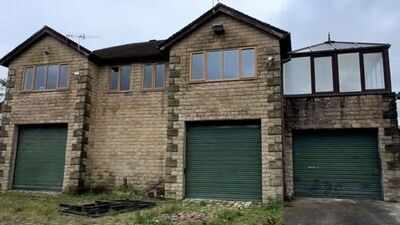
A couple have given a disused Land Rover dealership in Derbyshire, England a new lease of life by transforming the former commercial property into a family home. Purchased for £330,000, the building had stood empty for more than a decade before its new owners began adapting it for residential use. The project has allowed them to make use of an existing structure rather than start from scratch, while the large forecourt remains one of the property’s most unusual features, with enough room to accommodate around 50 cars.
How did the couple turn a derelict Land Rover dealership into a 5-bedroom home
According to SupercarBlondie, the family bought the former dealership for £330,000 while it was still classified as a commercial property. The building had remained unused for more than 10 years, leaving its new owners with the challenge of turning a space designed for business into somewhere suitable for everyday family life.The purchase was not entirely straightforward. The property’s commercial classification added extra legal and lending requirements, making the buying process more time-consuming than a typical residential purchase.Once the sale was completed, the couple could begin adapting the building. Rather than demolishing it and constructing a completely new house, they worked with the existing structure, removing much of the interior to create a layout that would function as a home.
The upper floor now houses 5 bedrooms for family living
One of the most significant parts of the renovation was the redesign of the building’s upper level. According to Supercar Blondie, the space has been rebuilt to include 5 bedrooms, giving the property the layout expected of a family home rather than a commercial premises.The change required more than simply moving furniture into an existing showroom. Much of the interior had to be removed to make room for a more practical arrangement. The aim was to create spaces that could be used comfortably for everyday activities, with separate bedrooms forming an important part of the new layout.The decision to retain the original structure also shaped the project. Instead of undertaking a complete rebuild, the owners adapted what was already there.
A forecourt large enough for around 50 cars remains part of the property
The former dealership’s forecourt is another distinctive feature of the converted home. According to the Birmingham Mail report, the outdoor space can accommodate around 50 cars, giving the property a large area for parking.For a typical family house, even a spacious driveway would rarely offer anything approaching this capacity. The forecourt reflects the building’s original purpose, when space was needed to display vehicles and accommodate customers visiting the dealership.Although the property has changed its role, the expansive outdoor area remains an important part of its character. It also illustrates the difference between converting a commercial building and buying a house designed from the outset for residential use.A dealership requires a layout that supports business operations, including vehicle access and substantial external parking. A family home, by contrast, needs comfortable living areas and rooms suited to everyday routines. The couple’s project brings these different requirements together on one site.
The renovation could offer substantial savings compared with buying a larger home
The financial side of the project was another reason the conversion attracted attention. Supercar Blondie reported that the couple had spent around £90,000 on the renovation at the time of its report, with total spending expected to remain below £200,000.The reported figures suggest that adapting the property could be considerably less expensive than purchasing a comparable 5-bedroom home in the same area. Supercar Blondie stated that the family estimated savings of around £230,000 through the conversion.Renovation expenses can vary depending on the building’s condition, the work required to make it suitable for living and the changes needed to create a practical layout. The dealership’s commercial classification also meant the purchase involved additional legal and lending requirements.The transformation also reflects a broader opportunity to reuse buildings that are no longer required for their original purpose. Disused dealerships, with their substantial floor areas and open layouts, can offer possibilities beyond vehicle sales. Other abandoned dealerships have also been repurposed, although not all have been converted into homes.