








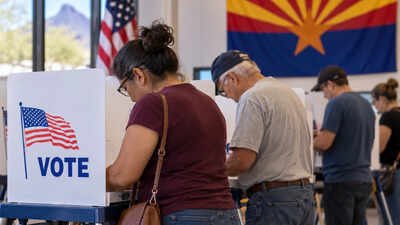
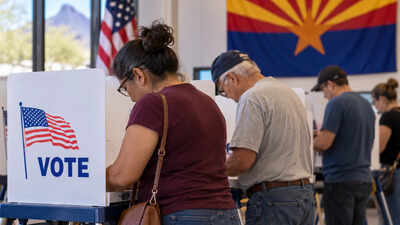
With the November 3 midterm elections just days away, 25 US citizens in Arizona have regained their voting access after being wrongly identified as possible noncitizens. Their registrations were restored following a legal dispute between Maricopa County Recorder Justin Heap and Arizona Attorney General Kris Mayes. The two sides reached an agreement through court-ordered mediation on Friday, bringing the lawsuit to an end.These people had previously voted in US elections but later found their registrations restricted because officials questioned their citizenship. Investigations eventually confirmed that they were American citizens. However, that finding did not immediately resolve the problem, as Heap’s office maintained that it needed documentary evidence before allowing them to vote again.According to Arizona Mirror, the disagreement reached Maricopa County Superior Court after Mayes sought to have the affected registrations restored before the election. The matter was settled when her office provided the citizenship information requested by Heap’s office.Of the 25 people covered by the lawsuit, 24 had their active voter status restored following mediation. The remaining person had already regained voting access after independently submitting proof of citizenship. The recorder’s office also issued early ballots to 18 affected voters who were enrolled in the county’s Active Early Voting List.
Voters identified as noncitizens
The dispute is related to a review of Arizona’s voter registrations. Heap’s office had used a federal database called the Systematic Alien Verification for Entitlements (SAVE) to identify people who might not be US citizens.The database, which had been modified under the Trump administration to help identify possible noncitizens registered to vote, has also incorrectly flagged American citizens.Using this system, Heap’s office identified 207 registered voters as possible noncitizens. Their information was then forwarded to the Maricopa County Attorney’s Office for further examination.Among those flagged, 60 had participated in earlier elections. Heap changed their registration status, leaving them unable to vote unless they produced the required documents establishing their citizenship.However, when the Maricopa County Attorney’s Office examined those 60 cases, it found that 52 people were US citizens. Only eight were identified as noncitizens. The investigation also found that no more than three of those eight had voted in the same election.The Arizona Attorney General’s Office reached similar conclusions. But even after the citizenship of the affected voters had been verified, 25 people remained without restored voting access.
Matter ended up in court
The two offices disagreed over what was required to reinstate the voters. According to KJZZ 91.5 FM, Heap’s lawyer told the court that although investigators had established the voters’ citizenship, they had not shared the documents supporting those findings with the recorder’s office. Heap maintained that the registrations could be restored once the necessary evidence was received.Meanwhile, Mayes disputed the handling of the case. Her office argued that Heap should not have restricted the registrations before confirming that the people concerned were not American citizens.Under the state law cited by the Attorney General’s Office, a recorder must confirm that someone is not a US citizen before cancelling their voter registration. Mayes’ office argued that suspicion alone did not meet that requirement.With the election approaching and the disagreement unresolved, Mayes filed a lawsuit seeking to restore voting access to the 25 citizens.
Two sides reach an agreement
At a court hearing on Friday, the Attorney General’s Office indicated that it could provide the driver’s licence information used to verify the voters’ citizenship.Later that day, both sides met with Judge Christopher Whitten, who had been appointed to mediate the dispute. Once the documentation was provided, Heap’s office reinstated the remaining affected voters.Heap defended his decision to wait for the records saying, “We needed legally sufficient documentation of citizenship, we received it, and we immediately restored the voters. Our office fulfilled its duty to protect eligible voters while upholding Arizona law.”Mayes, however, continued to question why court intervention had been necessary. “It should not have taken litigation to make Justin Heap follow the law; that is his duty and the duty of all election officials,” she said. Maricopa County Supervisor Tom Galvin also criticised Heap for his handling of the registrations.Following the agreement, Mayes agreed to dismiss the lawsuit, while the recorder’s office confirmed that the affected citizens had regained active voter status.The settlement also allowed early ballots to be issued to 18 voters on the Active Early Voting List. October 23 was the deadline for requesting an early ballot, and county officials advised voters to return mailed ballots by October 27.