










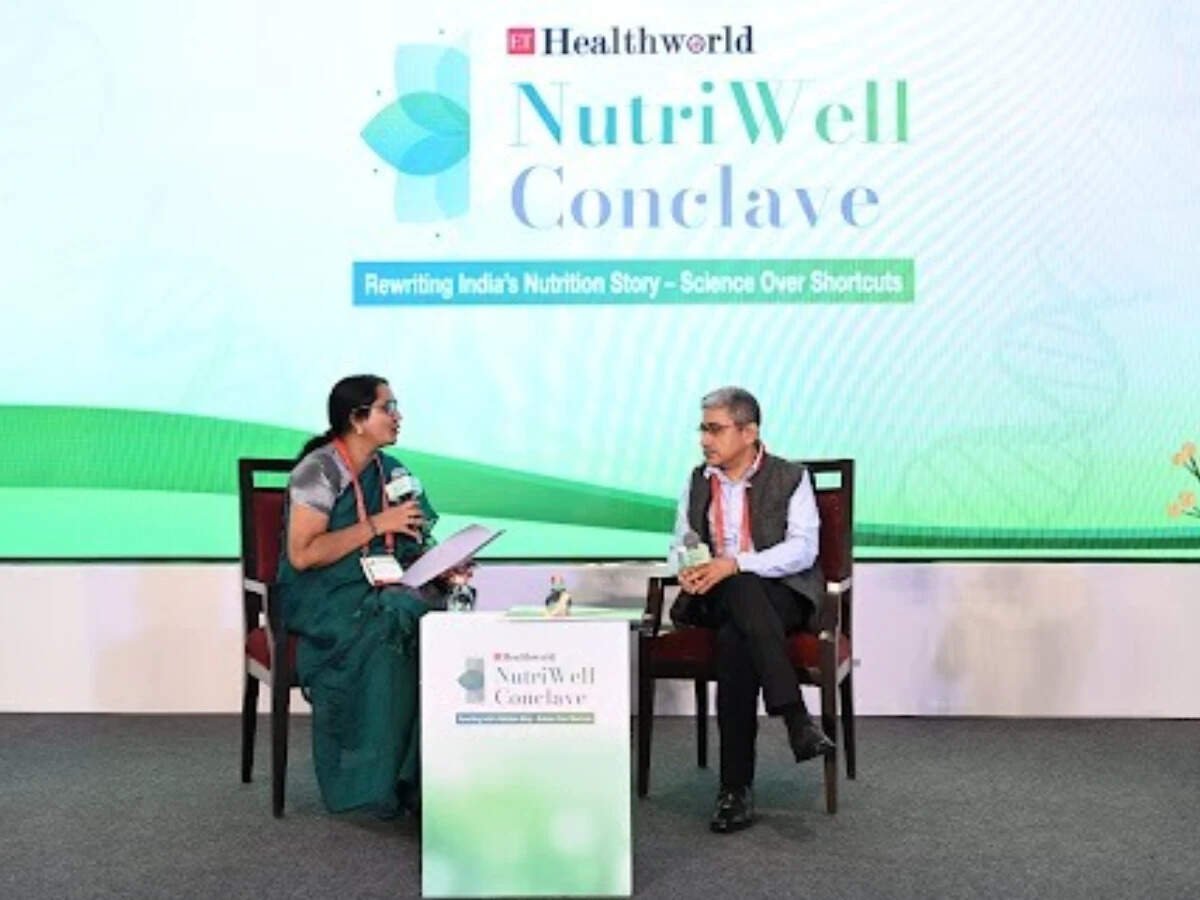

At the ETHealthworld Nutriwell Conclave 2026, Rajit Punhani, CEO, FSSAI, highlighted the need for stronger food safety regulations, responsible marketing, consumer awareness and industry accountability.
In conversation with Pratibha Raju, Associate Editor, ETHealthworld, Punhani expressed concern over affordable processed foods replacing balanced meals, particularly among economically weaker communities. Addressing nutritional deficiencies such as anaemia, he called for experts to explore the role of seasonal, locally available and balanced diets in meeting nutritional requirements.
Speaking about regulatory enforcement, Punhani identified the lack of meaningful deterrence as a major challenge. He emphasised that businesses must recognise food safety compliance as a responsibility rather than an operational burden.
“Regulation is not a burden; it is a duty,” he said, stressing the importance of stronger enforcement and restoring consumer trust.
Addressing the rapid growth of quick commerce, Punhani advocated greater transparency in online food retail, including access to manufacturing dates, expiry dates and batch numbers. He also expressed his personal support for disclosing product sourcing from dark stores and cloud kitchens.
On front-of-pack labelling, he highlighted FSSAI’s proposed four-month timeline for issuing the notification, alongside a 365-day transition period.
Punhani also expressed support for making food testing results and enforcement actions publicly accessible. He envisioned an ecosystem where inspections and product recalls become routine practices, strengthening accountability and consumer confidence.
The conversation reinforced the importance of collaboration between regulators, businesses and consumers in building a safer, healthier and more transparent food ecosystem.
Key takeaways:
- Prioritising balanced nutrition over excessive dependence on processed foods.
- Strengthening regulatory enforcement and industry accountability.
- Ensuring greater transparency across quick commerce platforms.
- Empowering consumers through accessible nutritional information.
- Building consumer trust through transparent food safety practices.